Part One: The Fire Engine Saga
I was five years old, staying at my aunt's place in a tiny, sleepy town in South India. My parents had left me there for a month and they had not told me why. However, it didn't matter. I had more pressing matters to attend to. I was a busy chap like that. On that one particular day, I was trying to figure out the population of an ant colony near the front door. It was not an easy task. They refused to stop moving to let me count. There were other challenges as well. I would start counting, "One, seven, three, four, eight..." and then lose count as I had run out of numbers I knew. Even at five, I was a budding mathematician.
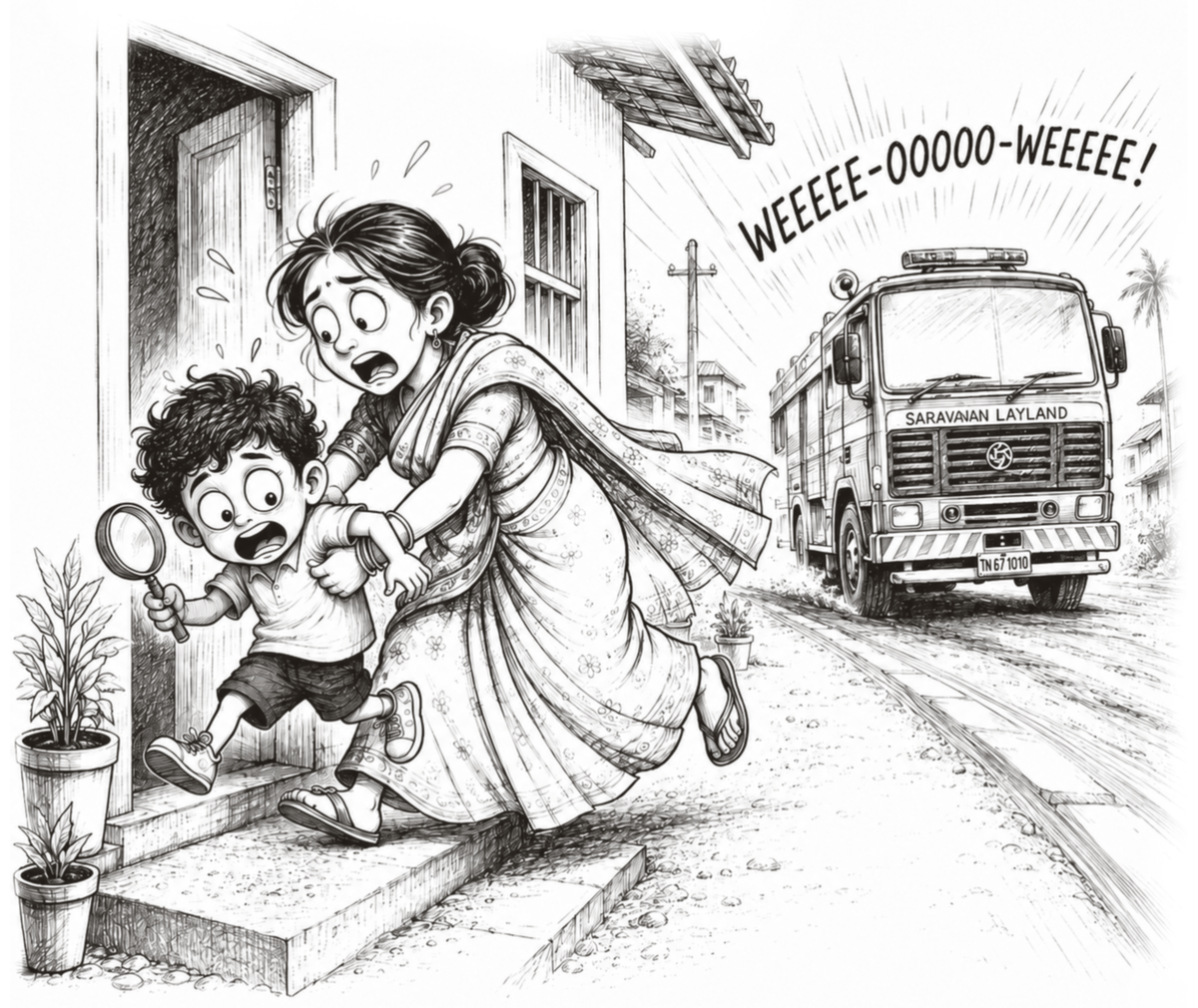
Suddenly, WEEEEEE-OOOOO-EEEEEE! It was a shrill noise that I had never heard before. In the distance, a massive, roaring red beast of a truck came hurtling down the main road like it owned the entire road. As I stood there mesmerized, my aunt sprinted out of the house like a startled mongoose, scooped me up like a sack of potatoes, and hustled me into the house before I could even blink. Even in that ruckus, I could hear her saying, "These fire engine drivers! What reckless fools they are! Always driving about with their eyes shut!"
Wait. What?
Eyes closed? Driving a mega-ton screaming red machine on four wheels without looking where they were going?! My jaw instantly hit the floor.
"Really?" I squeaked, completely torn between sheer terror and absolute awe. "That's so cool!"
Instantly, I retired my long-held ambition of becoming a professional candy taster. I had a new purpose: dedicating my life to catching a glimpse of these superhumans of the road who navigated rush hour traffic purely on vibes. It was a project that I became fixated on and suddenly my life purpose was locked in. I was in awe of the audacity of these visually challenged men, whose only GPS was their acute sense of smell. I assumed all they needed was to catch a whiff of the smoke from a fire anywhere in the country and before you knew it they were well on their way like banshees with stubbed toes.
Almost instantly my project hit a snag. The problem was, actual fires were rare in our quiet neighborhood. How do you collect data on fire engines when these fire engines hardly come by? It was an infuriating situation. However, the little scientist in me refused to give up.
On many afternoons I would sit and eye the neighbour's prize-winning pots of jasmine plants. They looked dry. Dubiously dry. Just sitting there and doing nothing particularly useful with their obvious flammability. The idea of torching them for the sake of jump-starting my data collection efforts did cross my mind. Constantly. With the obsessive compulsion of a scientist who was looking to increase his sample size and considering all options.
Thankfully, my natural laziness and the fearsome size of the said neighbour's moustache and nostrils beat out my commitment to science. The jasmines survived.
However, there were rare moments when I spotted them while I was travelling on the local bus. But those were fleeting instances when they would hurtle past in a red blur. This made it very difficult to confirm the main hypothesis: were their eyes closed? I would then sulk through the rest of the day in disappointment like a proper scientist.
Between those sightings, I would sit on my verandah during those long, dry months and agonize over the practical problems of driving without seeing: how did these fire engine drivers avoid the stray cows or make tight left turns into Pundulingam Street? Was there a co-pilot yelling directions, or did they keep a trained parrot squawking, "LEFT! LEFT! TREE! TREE!!!"?
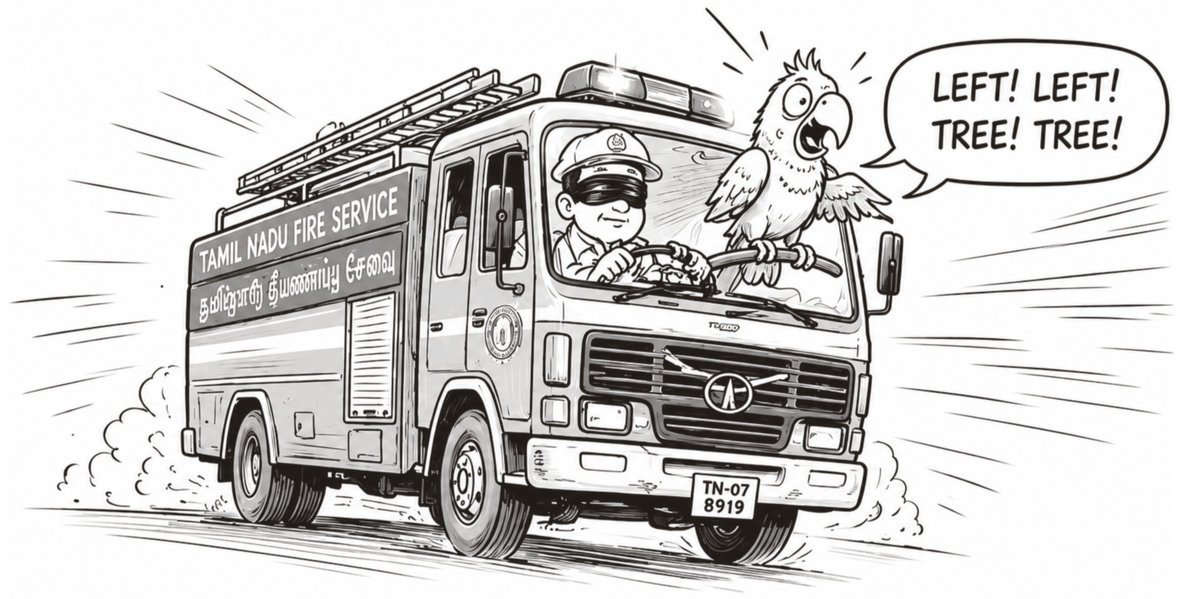
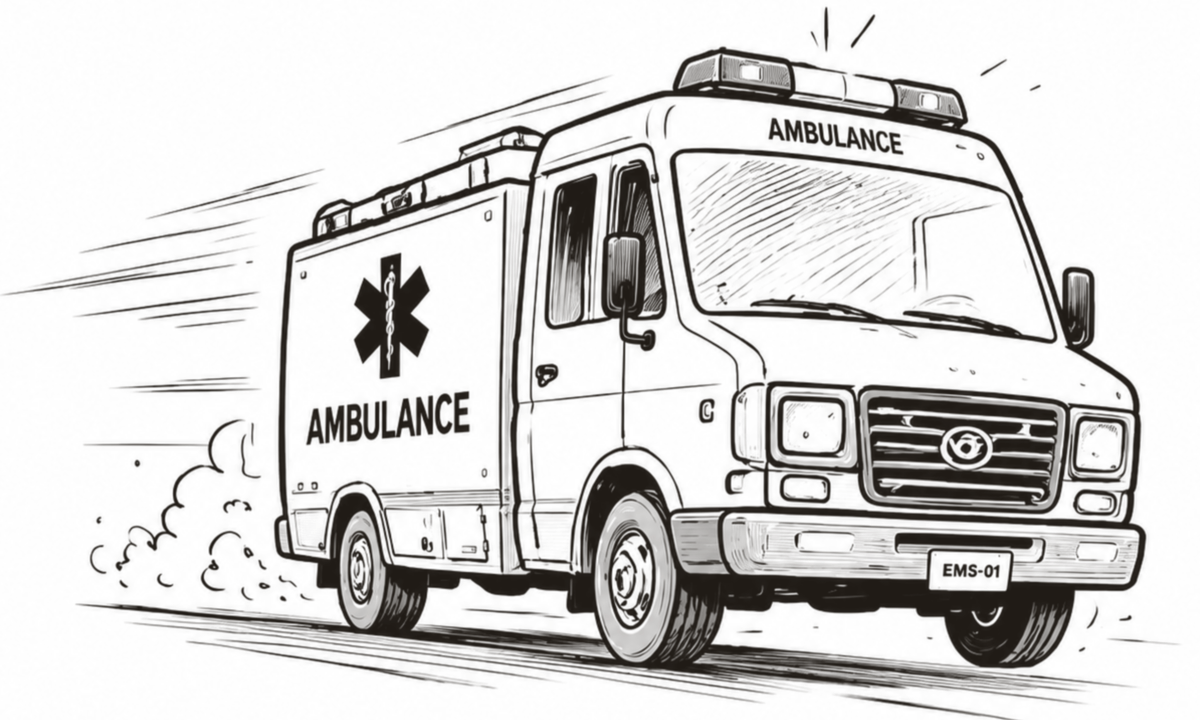
And was there collateral damage? How many poor aunties and uncles were run over by fire engines every week? Was that why there was always an ambulance not far behind, like a dedicated clean-up crew? Did the fire department specifically recruit blind people, or did they just hand out blindfolds on their first day?
My hyperactive imagination was plagued by these questions and more. Asking my dad or any other adult I knew was out of the question. I was easily the sharpest mind within a five minute sprint radius from where I lived. My dad paid the bills, my mum made decent decisions about vegetables and my baby brother drooled neat little puddles around the house. However, when it came to the subject of blind firemen, I was the leading expert, and we all knew it. Okay, I knew it. The rest were barely aware the field existed.
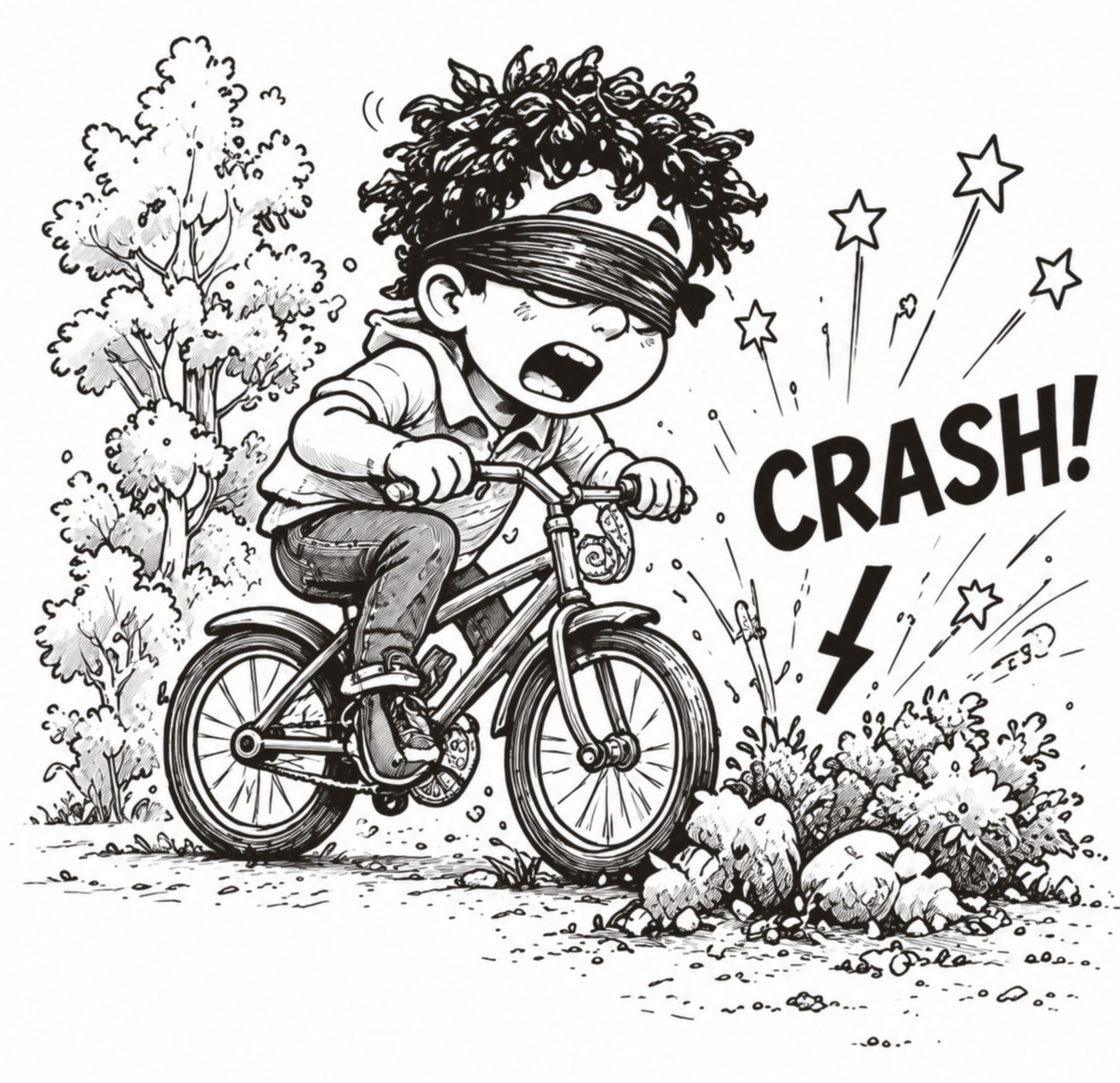
I spent many of my formative years in terrified awe of these titans. I couldn't cycle down the street without hitting every cow that was trying to avoid me and yet these speed maniacs spent their days navigating rush-hour traffic by instinct alone. When it came to choosing between concerned for the welfare of the general public, I chose to admire them. The general public, I decided, would need to look after itself.
But with all good things, my idiocy met its tragic end during an English lesson in primary school.
"Driving with your eyes closed" was just a metaphor. A figure of speech. A lie that was on a loop in my head.
My world collapsed when I was forced to accept that these mythical road-warriors were just regular guys with normal 20/20 vision. The bubble of misconception didn't just pop; it burst with a wet, sloppy squelch. It seemed such a waste to have all those years of wonder ruined by primary school grammar.
I recovered, of course. I have the emotional bounce-back of a high-grade ping pong ball. Looking back, the incredible cocoon of fantasy spun by that simple misunderstanding was worth every second of those blissfully delusional years.
Part Two: Being Wrong Is Where It Starts
At first it seemed like I wasn't that bright after all. But I was wrong. When confronted with a new piece of information, I grasped it and saved it in my head. I then built on it compulsively, not knowing that the original idea was flawed.
What it does mean, as I later realized, is that this is just one of the fascinating ways that we learn. Making meaning of your experiences is what we are constantly trying to do. From the time we are born we have been constantly collecting, storing and constructing meaning from everything we see, hear, smell, taste and feel. That is how we build a mental picture of the world. It is perfectly normal to have misconceptions and sooner or later, we will be given the opportunity to question and change those misconceptions. That is when we modify our ideas and change our mental model of the world around us.
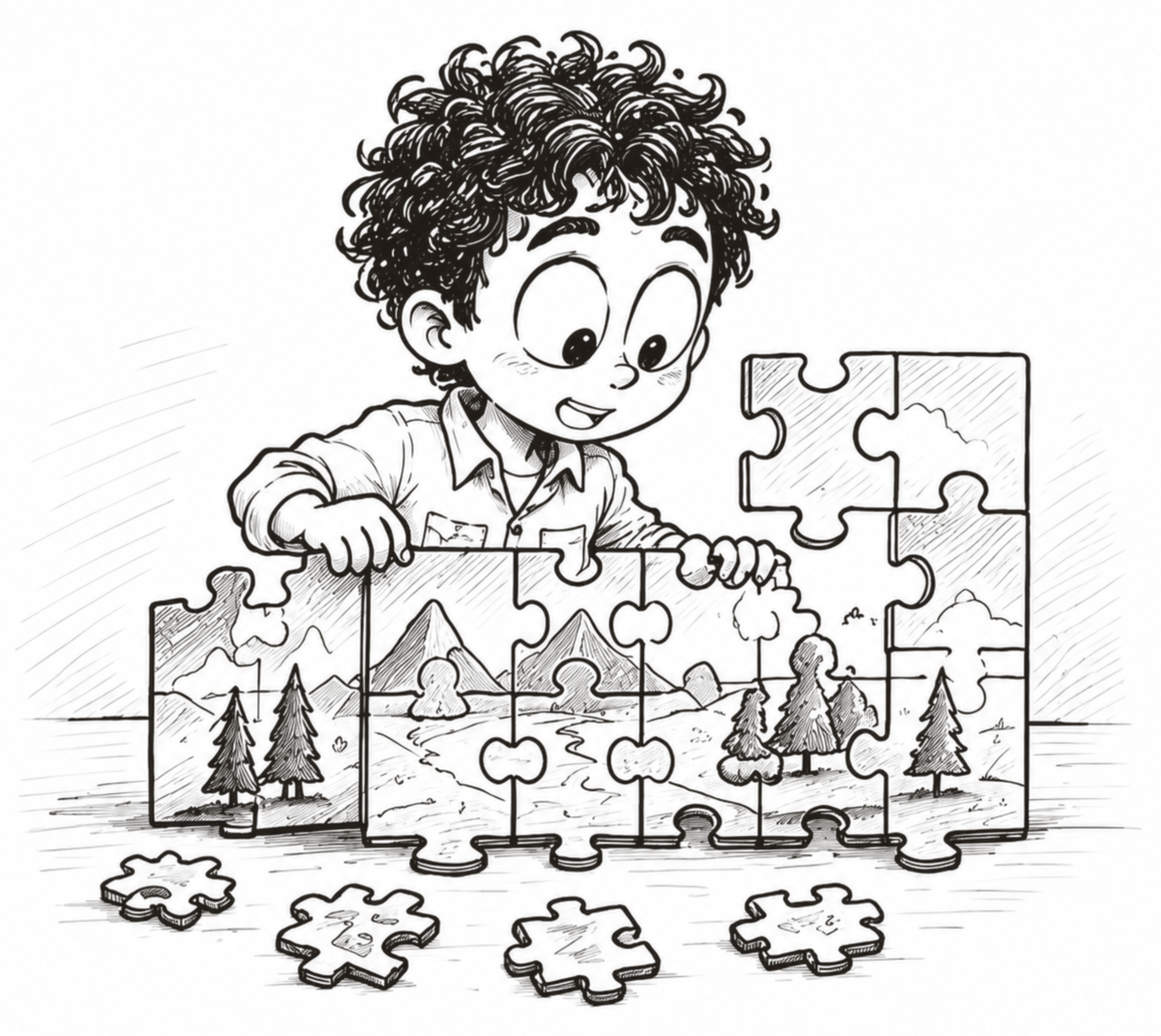
You will rarely notice the tilt when you adopt a flawed idea. Subsequently, you proceed to happily stack new facts and ideas on this wobbly foundation. Like me, you will stay in this stage of blissful ignorance until the truth reveals itself when you confidently explain to a room of relatives how firemen regularly use echolocation and smell to locate fires. It's when the room goes silent and looks at you, bewildered, that you realise you just made an impression for all the wrong reasons.
Looking back, I realised that this whole fire engine saga had actually made me more curious in a way that made me engage with the idea by thinking and theorising about what it meant. I became more observant and wanted to explore further how it worked. My curiosity about fire engine drivers would not have developed if I had known what the phrase "driving with their eyes closed" had meant from the start. As you can see, a wrong idea that gets stubbornly stuck in your head can be the most powerful engine of curiosity you will ever find. But it is also important to stay open to that moment when this misconception is tested and be willing to replace your flawed idea with new understanding.
Which brings us to the 'pop'.
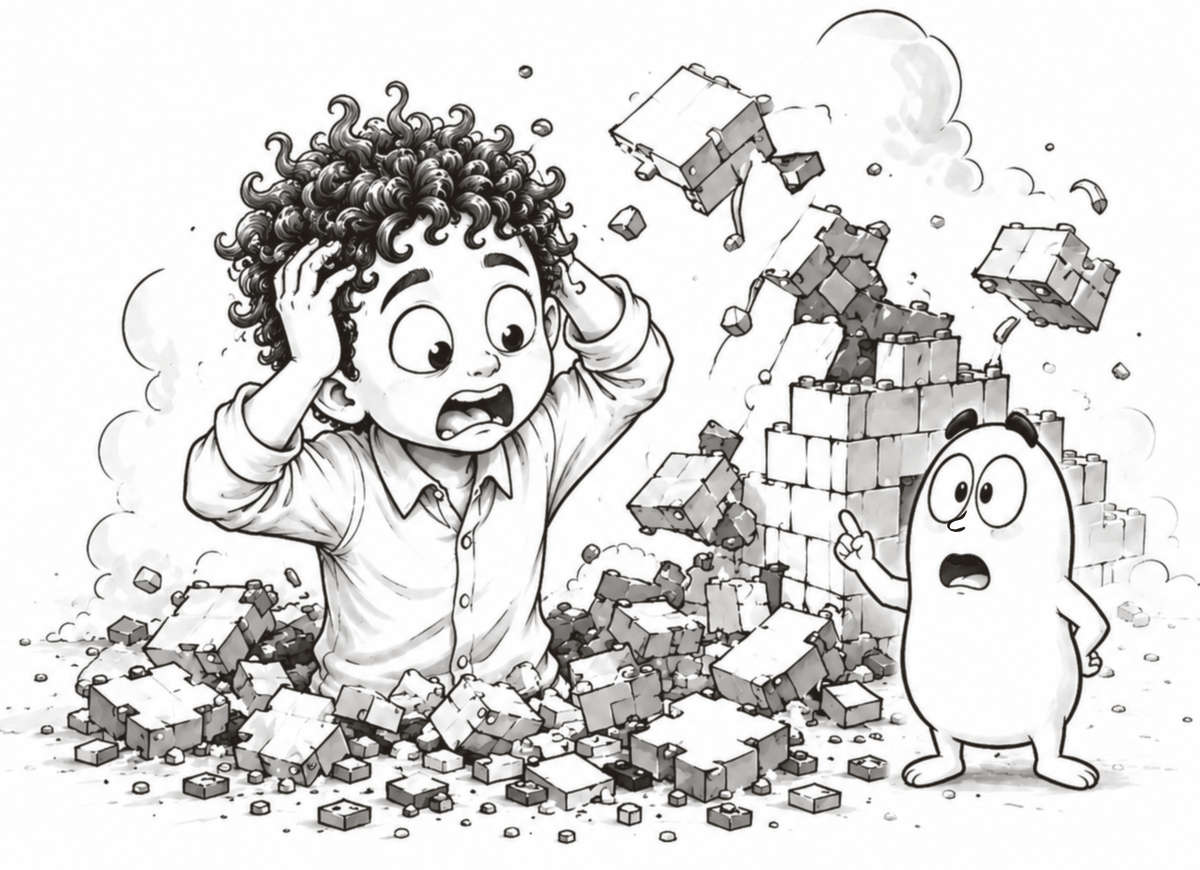
That fateful occasion, when I had to bravely confront the folly of my own absurd musings about fire engine drivers, is something that has recurred with regularity throughout my life. Those moments are something that I have come to embrace as regular companions on my learning journey. Sometimes, it's about altering what you know. At other times it's about replacing a small fact. And then there are times it's all about a full demolition followed by a reconstruction. It's like playing 'Jenga'. Now and then the bricks will come crashing down and you will need to start rebuilding all over again.
We all have been in these embarrassing and uncomfortable situations before. Like when your younger cousin, with an unforgettable smirk, corrects the way you pronounce paradigm after you pronounce it as 'paradigum' (with a silent 'u'). Or that time when you swore by your revision strategies and yet couldn't prove their effectiveness from the grades you get. It's embarrassing. I get that. I have been there. More times than I would have liked. Tragedies like those can be hard on your ego. That wet 'pop' echoes forever.
The good news is, it happens to the best of us. Sometimes it's obvious and sometimes it isn't. What is important is the remarkable thing that happens right after that. Your brain resets. It installs a small software update and says, "Thank you. That just made me a little sharper and more flexible. I am also slightly less terrified of being wrong." It basically functions as a high tech machine that is constantly trying to clean up messy data even as it is adding new ones.
You are not the problem. Sometimes, you just didn't have the proper scaffolding when learning new information. The next time you are embarrassed by something you got wrong, remind yourself to be thankful that you learnt something new. That 'pop' is not a reminder that you failed, but the sound of your brain levelling up.
Part Three: Bob Weighs In
Naturally, Bob is absolutely unhappy with the discussions so far. Bob has been listening to Part Two and rolling his eyes with increasing agitation, and he has thoughts. Bob always has thoughts. Specifically, Bob's view is that you should not put up your hand as long as you are not a hundred percent sure that what you are going to say is correct. Why get an answer wrong and risk throwing your confidence in the trash when you get laughed at? To Bob, this is basic common sense and he is deeply offended by your judgy side-eye.
To understand how Bob operates, let's look for Kai.
Kai's hand goes up.
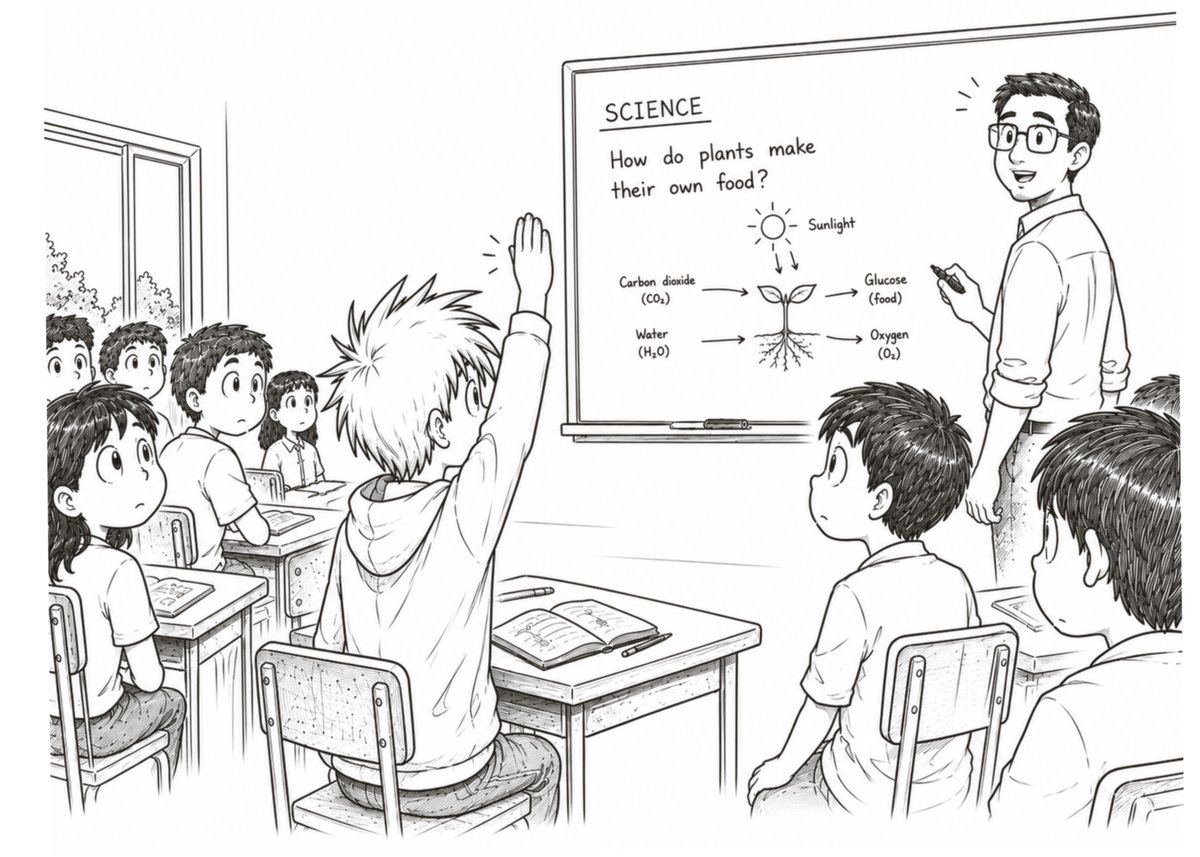
Just like that. Hand. Up.
Mr. Rajan sees it immediately. "Kai! Great, let's hear it."
Thirty-seven pairs of eyes swivel. Kai's
"Plants use sunlight to turn water and carbon dioxide into food," Kai says. Quietly, but clearly. "they release oxygen as a kind of leftover."
A pause.
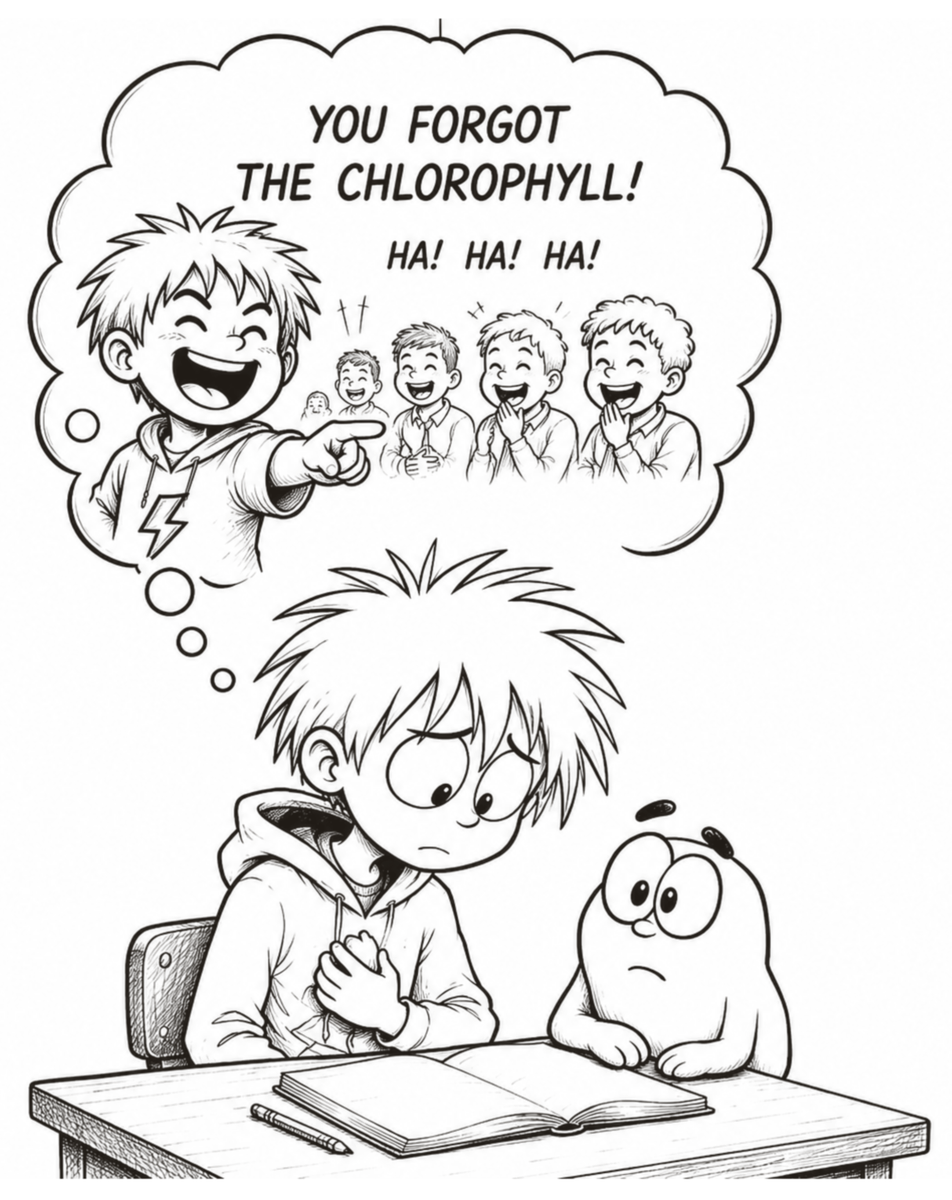
Then, from somewhere near the window, a giggle. Then another. Then Jayden, loud, confident Jayden who finds most things funny says "you forgot the chlorophyll" in the particular tone that eleven-year-olds use when they want everyone to know they know something you don't.
Mr. Rajan nods. "Kai's got the idea right, that's a solid answer. But Jayden has a point. Please tell us what role chlorophyll plays?" He moves on. The class moves on.
But Kai does not move on. Getting it mostly right and still being interrupted by Jayden feels, somehow, worse than being completely wrong.
Bob, naturally, has arrived.
Bob: Well.
Kai: Don't.
Bob: I'm not saying anything.
Kai: You have a very loud face.
Bob: I just think it's worth reflecting on what happened there.
Kai: It was one wrong answer.
Bob: It was one wrong answer in front of everyone. There's a distinction. They laughed, Kai.
Kai: Jayden laughed. And Jayden laughs at everything.
Bob: Other people laughed too. I counted.
Kai: Of course you did.
Bob: I'm just saying. You put your hand up. You were wrong. Everyone saw. What do you think they're thinking right now?
Kai: Probably nothing. They've moved on.
Bob: Have they though? Have they really? Or are they sitting there thinking, oh, that's the kid who misspelt mischievous in Primary Two?
Kai: I wasn't even that confident.
Bob: You were confident enough to put your hand up! When you never put your hand up! So when you do put your hand up, people notice, and then when it's wrong, they notice that too, and now the one time you spoke up is the one time you got it spectacularly wrong.
Kai: It wasn't spectacular. Mr. Rajan said I was on the right track.
Bob: He was being kind. Teachers are paid to be kind. That's different from being right.
Kai: (quietly) I did have part of it right though. The making food part.
Bob: The wrong part of the right part.
Kai: That doesn't even make sense.
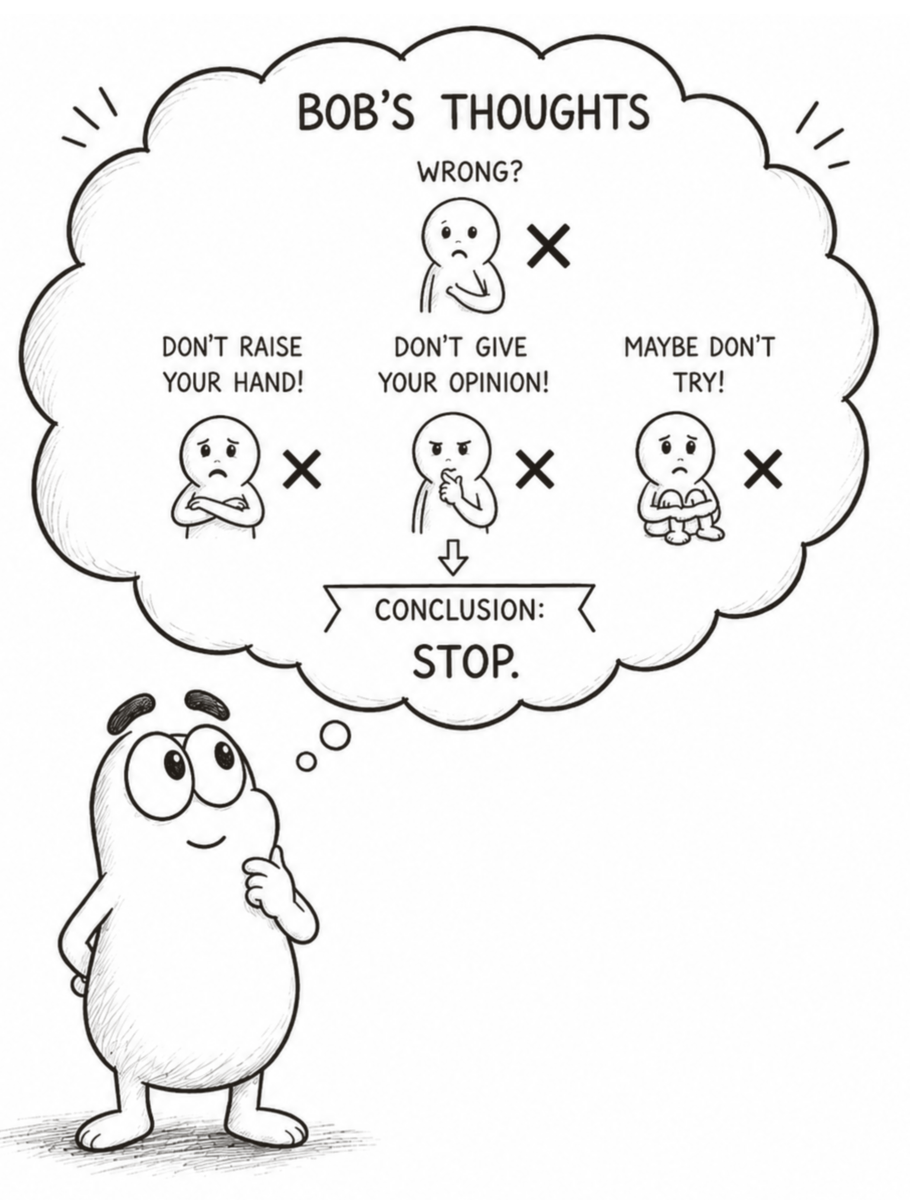
Bob: What doesn't make sense is raising your hand when you're not completely, one hundred percent certain. That's the lesson here. Next time, wait. If you're not sure, stay quiet. Let someone else answer. Let Jayden answer, he clearly knows everything.
Kai: If I wait until I'm one hundred percent certain, I'll never put my hand up.
Bob: Exactly! See? You understand!
Kai: Bob, that wasn't a compliment.
Bob: Wasn't it? Staying quiet is safe. Staying quiet means, nobody laughs. Staying quiet means...
Kai: Staying quiet means I never figure out what I actually understand and what I don't. If I'd stayed quiet today, I'd still think I had the photosynthesis completely right. Getting it wrong in front of everyone was horrible. But now I actually know what I got wrong. Now I'll remember it properly.
Bob: (pause) You're saying the humiliation was educational.
Kai: I'm saying the mistake was educational. The humiliation is just... your addition.
Bob: I'm not adding anything. I'm just pointing out what happened.
Kai: You're pointing it out in the worst possible way, at maximum volume, on repeat.
Bob: I'm thorough.
Kai: You're exhausting. And you're wrong. Mr. Rajan didn't make me feel stupid. Jayden didn't even really make me feel stupid. You're the one doing that.
Bob: (affronted) I'm trying to protect you!
Kai: From what? From learning things? From having another aha moment? Because that's what that was, Bob. An aha moment. An uncomfortable, slightly public, Jayden-laughed-at-me aha moment, but still.
Bob: I don't like aha moments. They involve being wrong first.
Kai: Everything involves being wrong first. That's basically the whole system.
Bob: I hate the whole system.
Kai: I know. But I'm going to keep putting my hand up anyway.
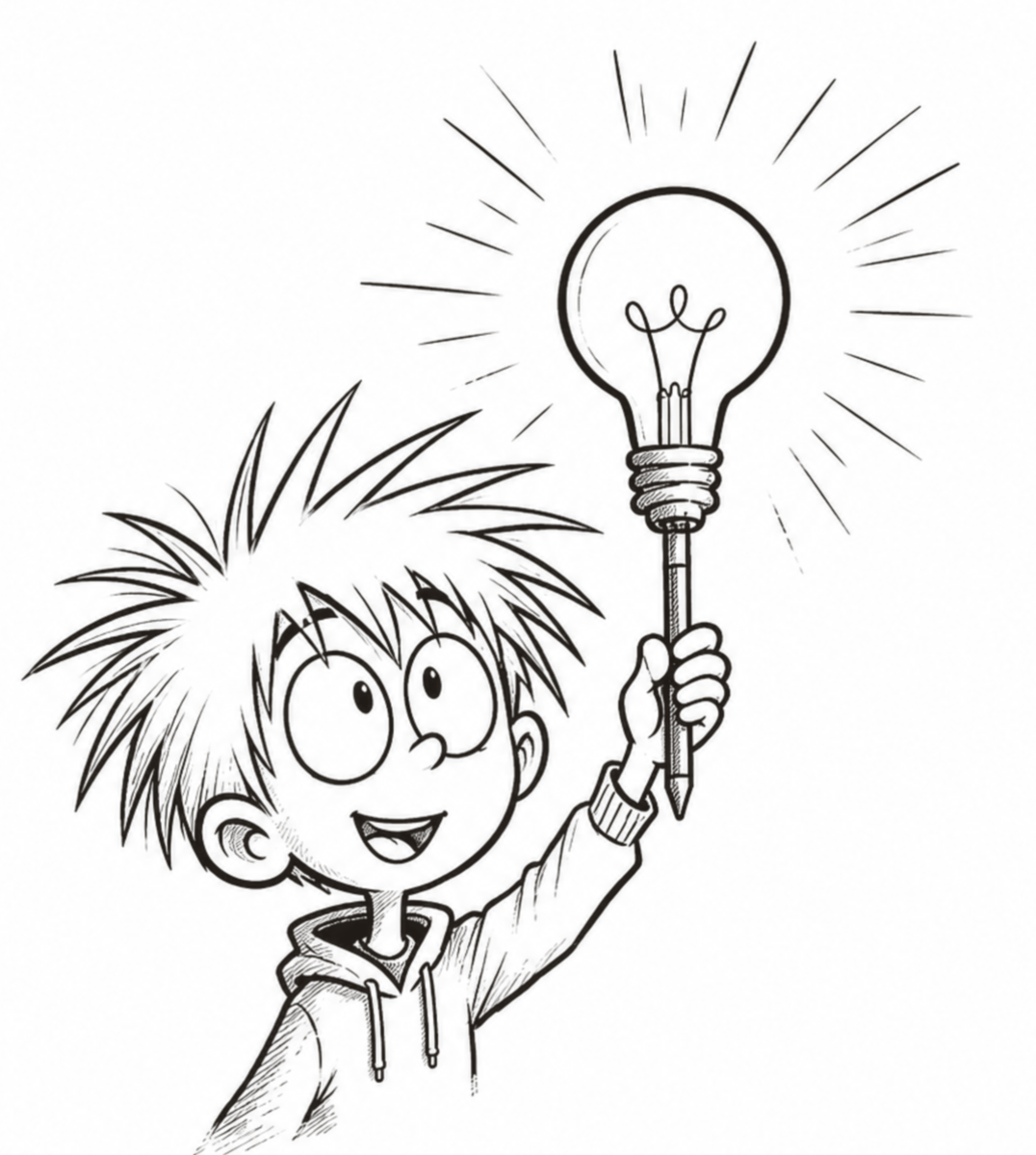
Bob: (long, pained pause) ...Even when you're not sure?
Kai: Especially when I'm not sure. That's when it matters most.
Bob: (very quietly) I'm going to need a moment.
Kai: Take your time. I'll be over here, being wrong and learning things.
Bob: (muttering) Absolutely unbelievable.
Part Four: The Takeaway
Let's keep this simple, because the idea itself is simple, it just doesn't always feel that way.
Getting things wrong is not the opposite of learning. It is the beginning of it. Every misconception your brain has ever built was your brain doing its best with what it had. And every time one of those misconceptions gets dismantled, every time a better understanding replaces a worse one, your brain gets a little bit stronger, a little bit more flexible, and a little bit more capable of handling the next hard thing.
The uncomfortable bit in the middle, the wobble, the pop, the slight desire to slide under the desk and never come back, that's not a sign that you're failing. That's the feeling of your brain actually working. Of it doing the thing it was built to do. Most people spend their whole lives trying to avoid that feeling. The good news is that every time you sit with it instead of running from it, it gets a tiny bit easier to bear.
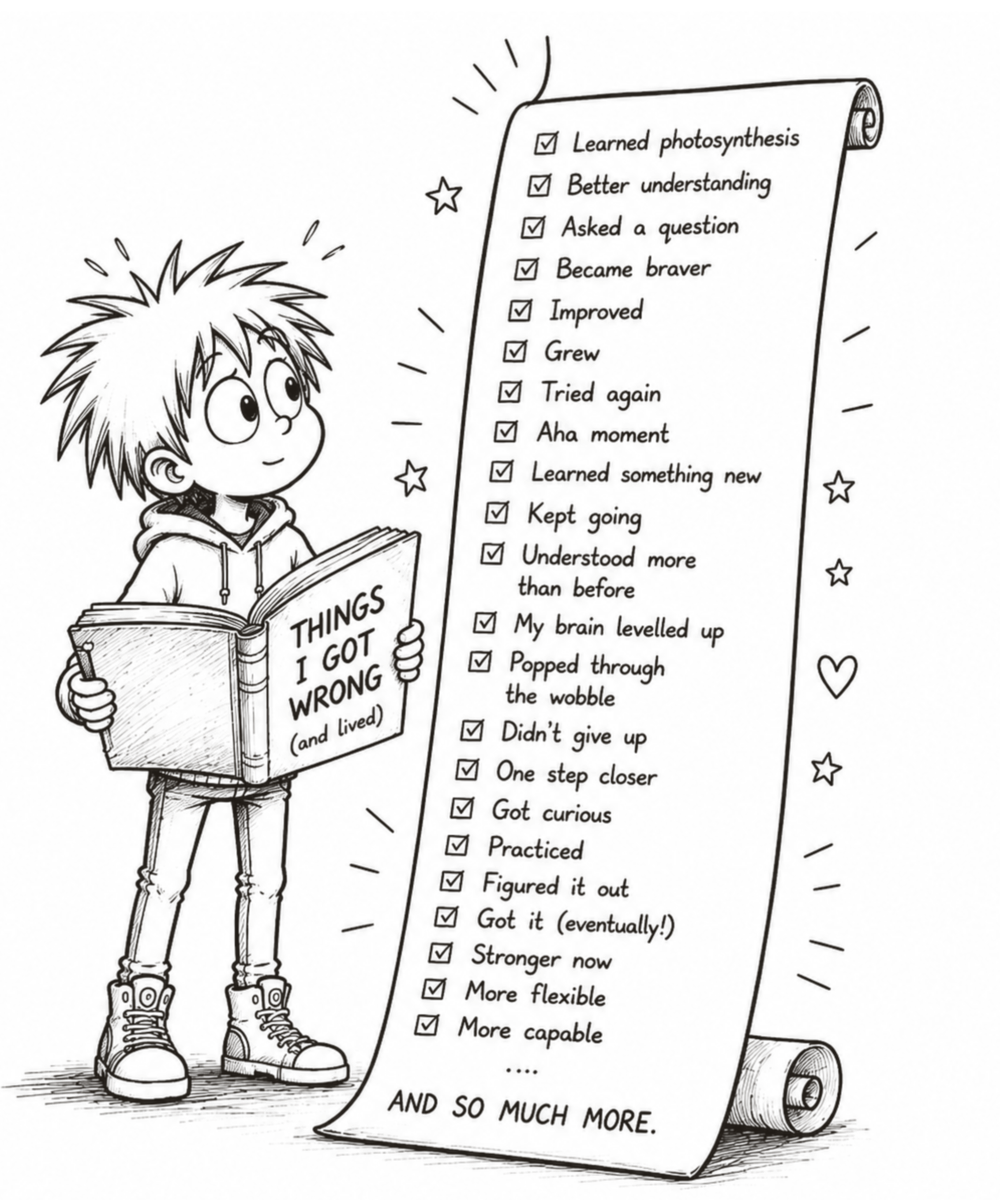
Bob will keep a list. Bob will suggest, every single time, that being wrong is proof you're not capable, that the smart move is to stop risking it, that silence is safer than trying. And he'll say it with such quiet, reasonable concern that it can be genuinely hard to argue with.
But here is what Bob will never put on his list: every time you got something wrong and came out the other side of it smarter. Every pop that preceded a breakthrough. Every humbling, deflating, slightly embarrassing moment that turned out to be the exact moment your brain levelled up.
That list, if Bob ever had the courage to write it, would be the most impressive thing about you.
Keep getting things gloriously, spectacularly wrong.
The fireman story had a happy ending. Yours will too.
(Bob would like it noted that Jayden's laugh was, objectively, quite loud, and that the classroom's reaction was more significant than Kai is giving it credit for. He would also like it noted, quietly, and only because it appears to be true, that Kai did have the right idea about photosynthesis. He is filing this under things that were more right than they looked at the time. It is, he will admit, a small but not entirely insignificant file.)
TRY THIS
“Apparently you are supposed to try this. I think it is completely unnecessary. But apparently that’s not my decision. Fine.”
Today, when you get something wrong in class, in homework, anywhere, don’t move on immediately. Pause for ten seconds and ask yourself one question: what did I actually think was true, and what is true instead? Name the old idea and the new one. That’s it. That’s the pop, made conscious. Do it once and you’ll start hearing it everywhere.
YOUR BOB MOMENT
Bob is absolutely certain you are the only person who has ever believed something completely wrong. He is, as usual, making that up. Every reader of this chapter has had their own fire-engine moment. A thing they believed with total confidence that turned out to be gloriously, spectacularly incorrect. We would love to hear yours. Head to tamingbob.com/stories, first name only, and tell us what you got wonderfully wrong. Bob will hate it. That is part of the fun.